If the previous Lenovo M920x build was about maximizing the potential of a 1-liter chassis, this new iteration of the homelab is about throwing absolute, unapologetic, enterprise-grade hardware into a form factor where it has absolutely no business being.
Welcome to the new cluster. It is dense, it is power-hungry, and frankly, its performance metrics are completely psychotic for a home network.
Let’s dive into the anatomy of this heavily over-engineered, 64-core, multi-terabyte virtualization beast.
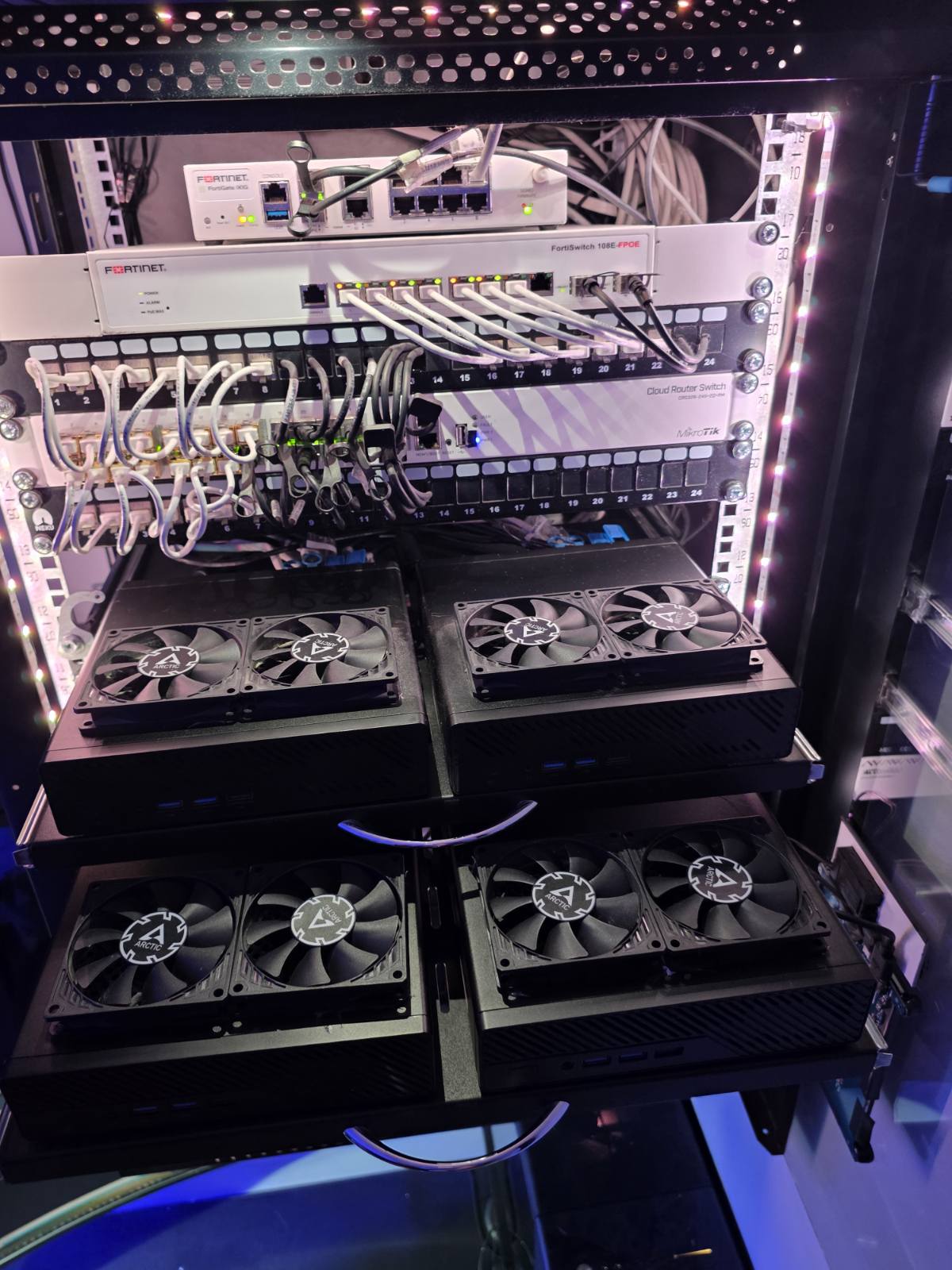
The Compute Tier: Minisforum MS-A2 on Steroids
The heart of this environment is a 4-node VMware cluster. Instead of racking up massive 2U servers that sound like jet engines, I opted for four Minisforum MS-A2 units. However, these aren’t your typical mini PCs. Because the MS-A2 features a native physical PCIe slot rather than relying on bottlenecked adapters, I was able to cram an absurd amount of enterprise networking and compute into each node.
Per-Node Specifications:
-
- CPU: 16 Cores / 32 Threads
- RAM: 128GB
- Local Storage: 2TB Lexar NM790 NVMe (Dedicated entirely to the vSAN ESA datastore)
- Networking:
- 2x 10GbE via Intel X710 (Dedicated to iSCSI traffic)
- 4x 25GbE via Intel E810-XXVDA4 (2x for vSAN, 1x for vMotion, 1x for VM Network/VLANs)
- 2x 2.5GbE native ports (Currently sitting completely unused—because when you have 120Gbps of theoretical bandwidth per mini PC, who needs 2.5G?)
Combining these four nodes yields a cluster with 64 cores, 128 threads, and half a terabyte of RAM.
The Storage Backend: vSAN ESA Meets ZFS
While the majority of my virtual machines live on the ultra-fast VMware vSAN ESA cluster (powered by the local Lexar NVMes and synchronized over dual 25GbE links), some VMs simply demand massive capacity.
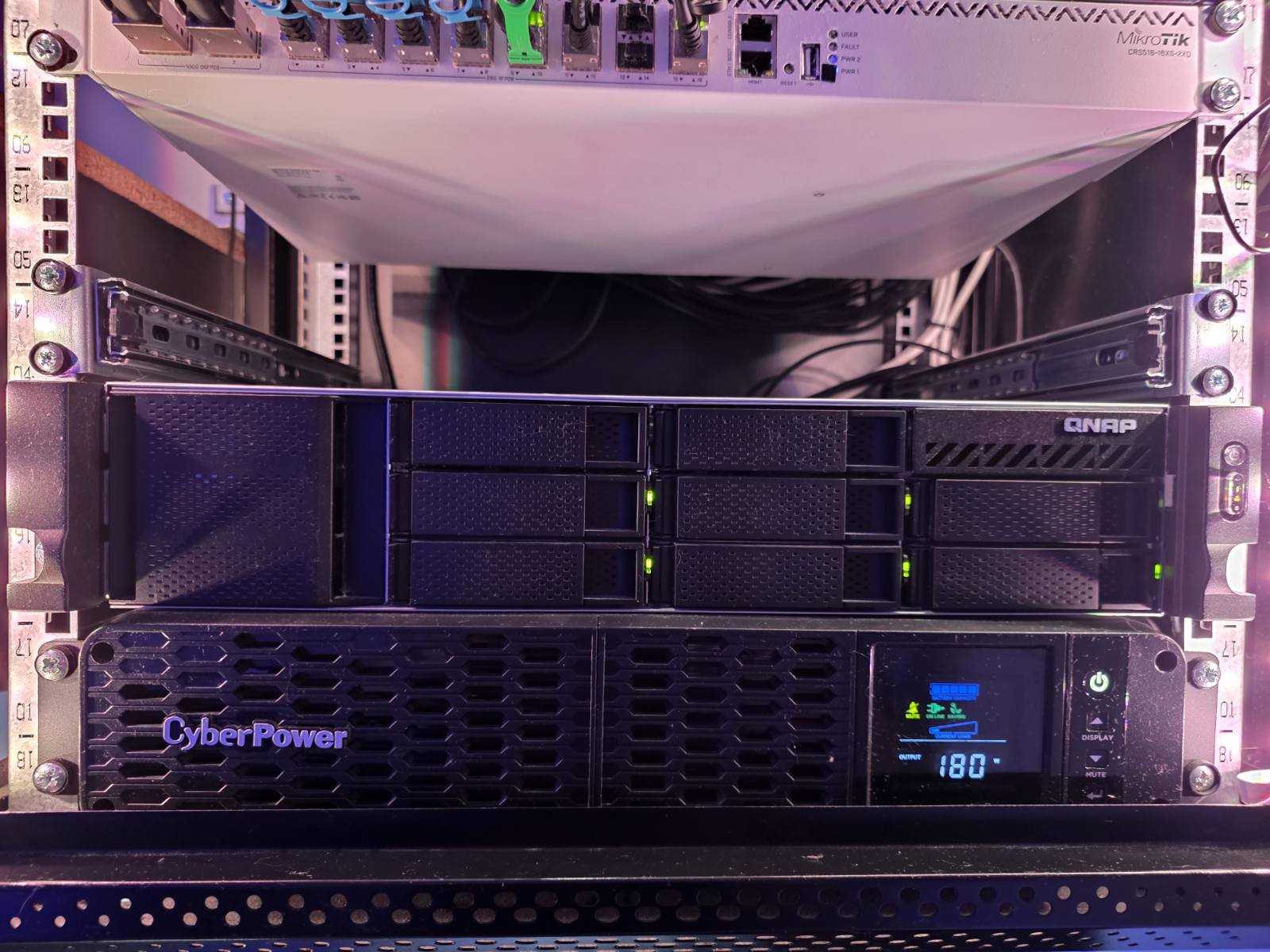
For the heavy-lifting storage, I deployed a QNAP TS-855eU NAS that acts as the ultimate iSCSI target.
The NAS Arsenal:
-
-
Memory: 64GB ECC RAM
-
Cache Tier: 2x 2TB WD Red SN700 NVMe SSDs
-
Capacity Tier: 8x 16TB Seagate IronWolf Pro HDDs configured in RAID 50
-
OS: QuTS hero (leveraging ZFS and QTier for dynamic, block-level data tiering)
-
This NAS carves out three massive 10TB iSCSI datastores, which are piped directly back to the Minisforum cluster over dedicated 10GbE links.
The Networking Backbone: A Tale of Three Switches
You can’t pump 25GbE vSAN and 10GbE iSCSI traffic through a standard consumer switch. The network topology had to be split and segmented to prevent these massive data flows from colliding.
The Edge & Security: Sitting at the edge of the network is a FortiGate 90G armed with a full ATP (Advanced Threat Protection) license. It is uplinked to the core LAN via dual 10GbE ports, ensuring that deep packet inspection doesn’t bottleneck internal routing.
The Switch Stack:
-
-
MikroTik CRS326-24S+2Q+RM (The Core): This handles all the heavy lifting for the storage network. Every iSCSI device, including the QNAP NAS and the Intel X710 cards on the compute nodes, patches in here.
-
MikroTik CRS518-16XS-2XQ-RM (The Hypervisor Backbone) : This switch is the dedicated nervous system for VMware. It exclusively handles the ludicrous 25GbE traffic generated by vSAN, vMotion, and the primary VM VLANs.
-
FortiSwitch 108E-FPOE (The Access Layer): This PoE switch manages the physical infrastructure, powering the IP security cameras, a FortiExtender 201E, and a FortiAP 231F for Wi-Fi.
-
Bulletproof Reliability: Backup & Power
Data that doesn’t exist in two places doesn’t exist at all.
To handle disaster recovery, a fifth Minisforum MS-A2 node sits outside the primary VMware cluster. This dedicated machine runs Veeam Backup & Replication. To guarantee data survival, Veeam executes backup jobs to dual destinations simultaneously: a dedicated local drive on the fifth node, and a segregated LUN sitting on the QNAP NAS.
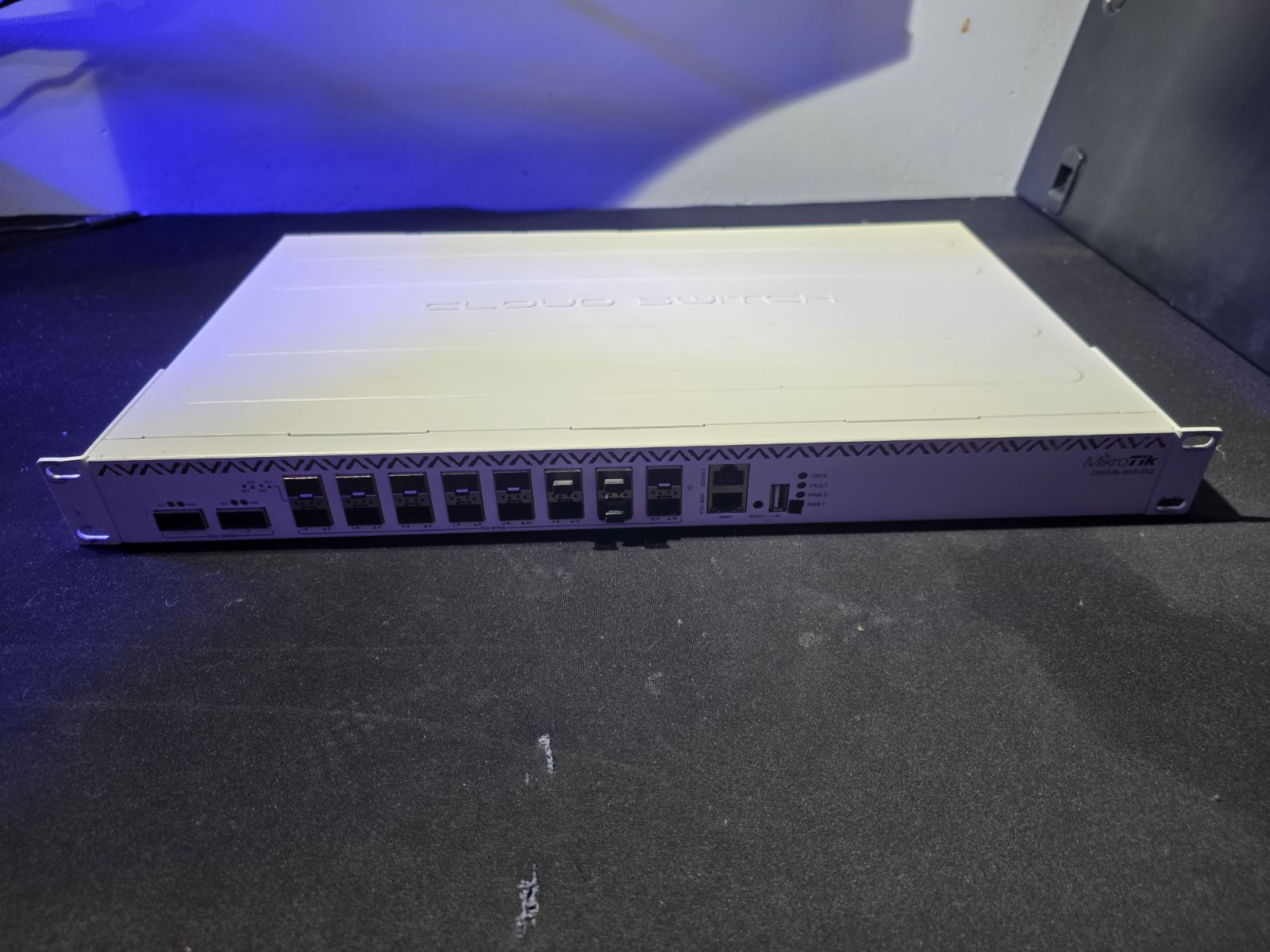
Finally, none of this matters if the grid goes down. The entire rack is heavily backed by a CyberPower CP2000EIPFCRM2U 1200W UPS. Thanks to the integrated RMCARD205 network management card, if a sustained power failure occurs, the UPS communicates with the cluster to gracefully power down the hypervisors, flush the ZFS cache on the NAS, and shut down the hardware before the batteries deplete.
It is loud, it generates heat, and it boasts more I/O throughput than most small-to-medium enterprise businesses. And it is absolutely glorious.