The 1-liter „TinyMiniMicro” form factor has taken the homelab community by storm, but the Lenovo ThinkCentre M920x stands out as a rare, hidden gem. Unlike most 1L chassis that compromise on expandability, the M920x features a native PCIe slot and incredible power efficiency.
With the right modifications, this compact machine can be upgraded into a full-fledged, enterprise-grade virtualization node. It can comfortably house a powerful Intel Core i7-8700, an expansive 64GB of RAM, and an impressive three NVMe drives—achieved by cleverly repurposing the M.2 Wi-Fi slot with a specialized NVMe adapter.
This hardware configuration makes it the absolute perfect foundation for demanding environments, such as a 4-node VMware vSAN cluster. However, packing this much density into a 1-liter box introduces a significant challenge: thermal throttling and extreme noise.
Here is how I solved the overheating problem and built the ultimate silent M920x micro-server.
The Hardware Roster
Before cutting into the case, let’s look at the components that make up this build.
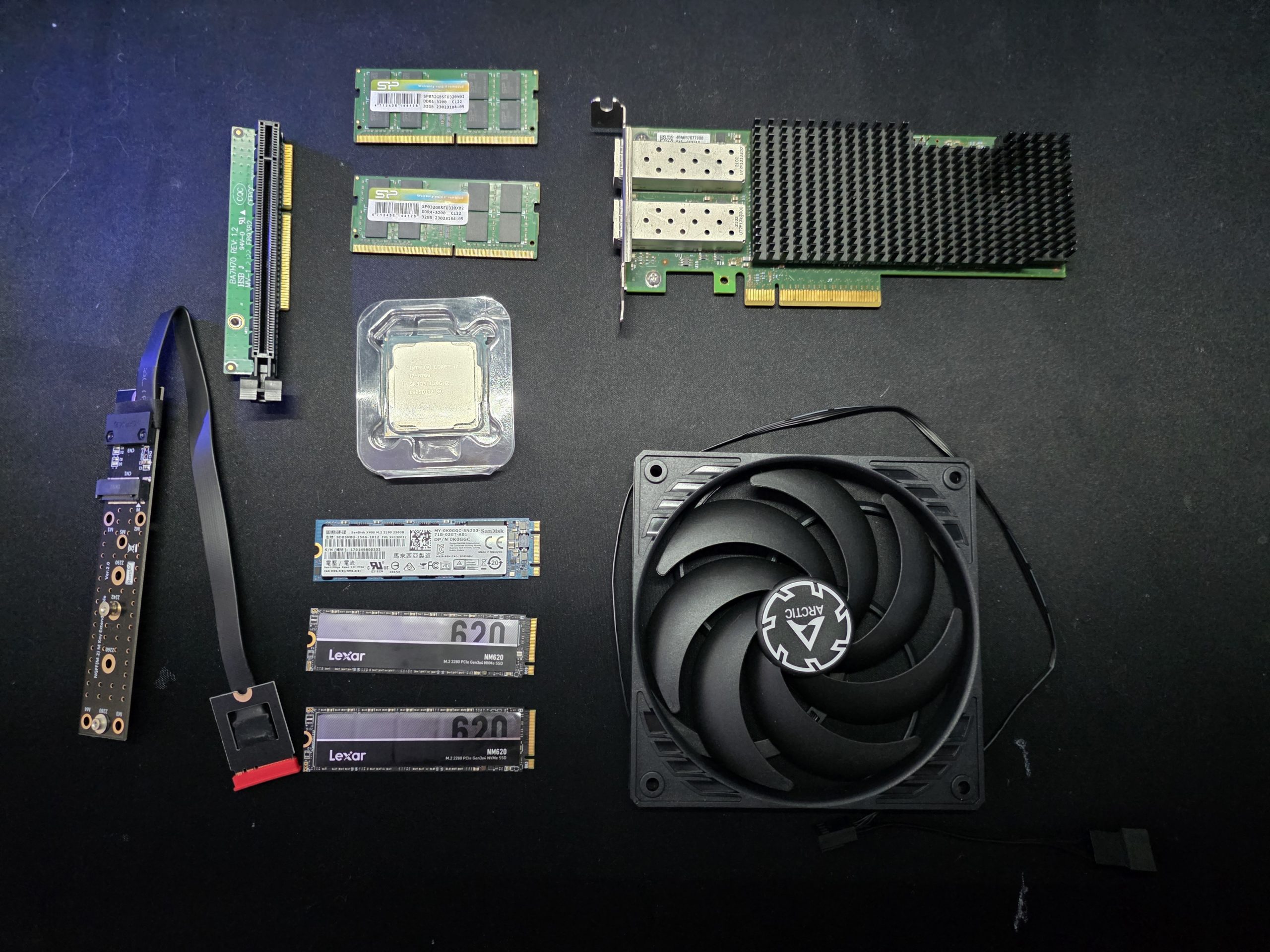
- Pictured above:
- CPU: Intel Core i7-8700
- RAM: 64GB (2 x 32GB)
- Storage Pool: 2x 1TB Lexar NVMe SSDs
- Boot/Cache Drive: 1x 512GB SanDisk NVMe SSD
- Networking: Intel X710-DA2 (Dual 10GbE)
- Adapters: PCIe Riser & M.2 Wi-Fi (A+E Key) to M.2 NVMe adapter
- Cooling: Arctic Slim 120mm PWM Fan
The stock blower-style fan inside the Lenovo chassis is simply inadequate for a 65W i7-8700 operating under sustained load. To address this, I opted for a top-down cooling approach using an Arctic Slim 120mm fan.
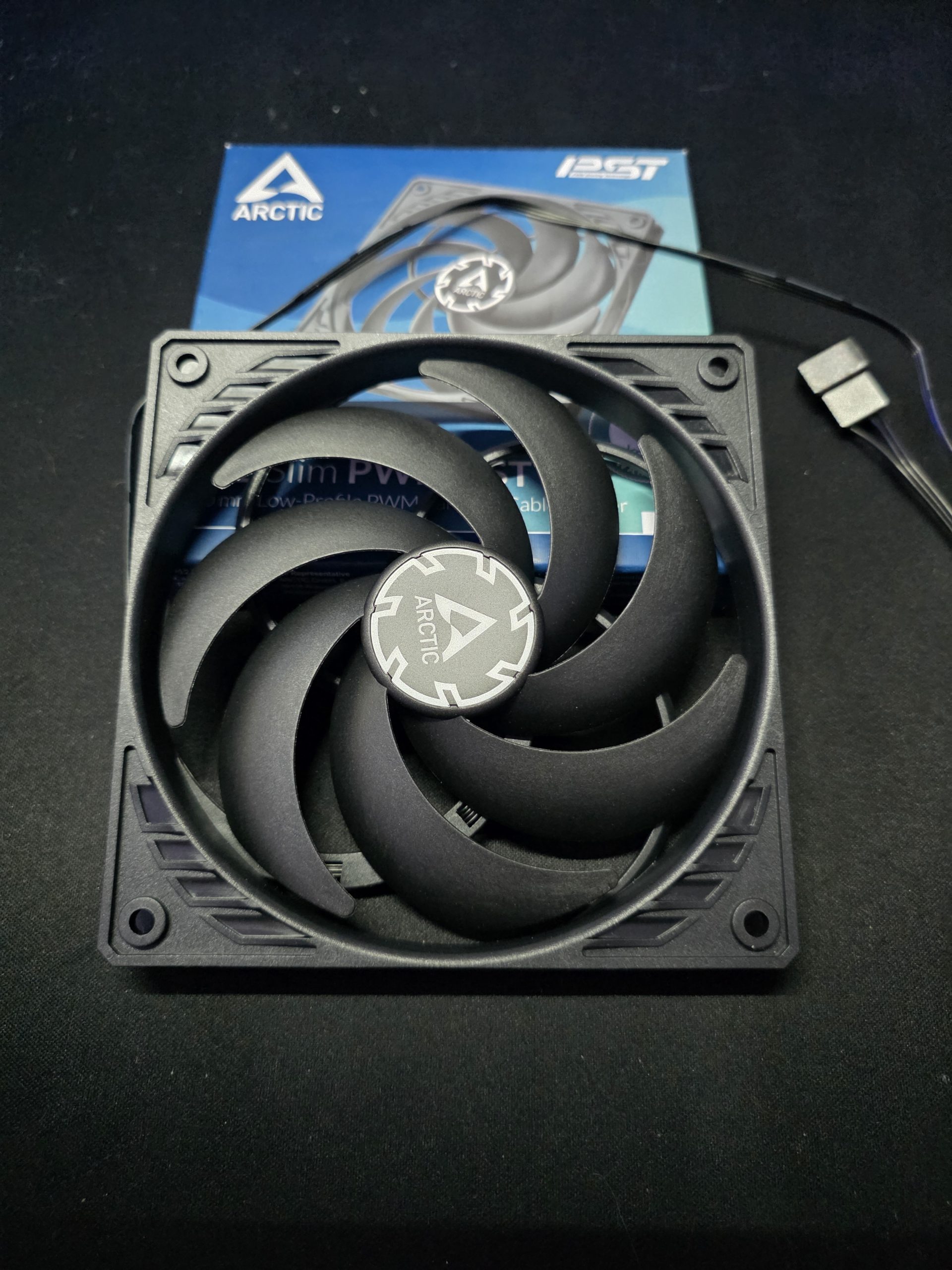
Step 1: The Case Modification
To allow the 120mm fan to pull in fresh, ambient air directly over the motherboard and CPU socket, the stock top panel had to be heavily modified.
Using a 100mm metal hole saw, I carefully drilled a massive intake directly into the top cover of the M920x.
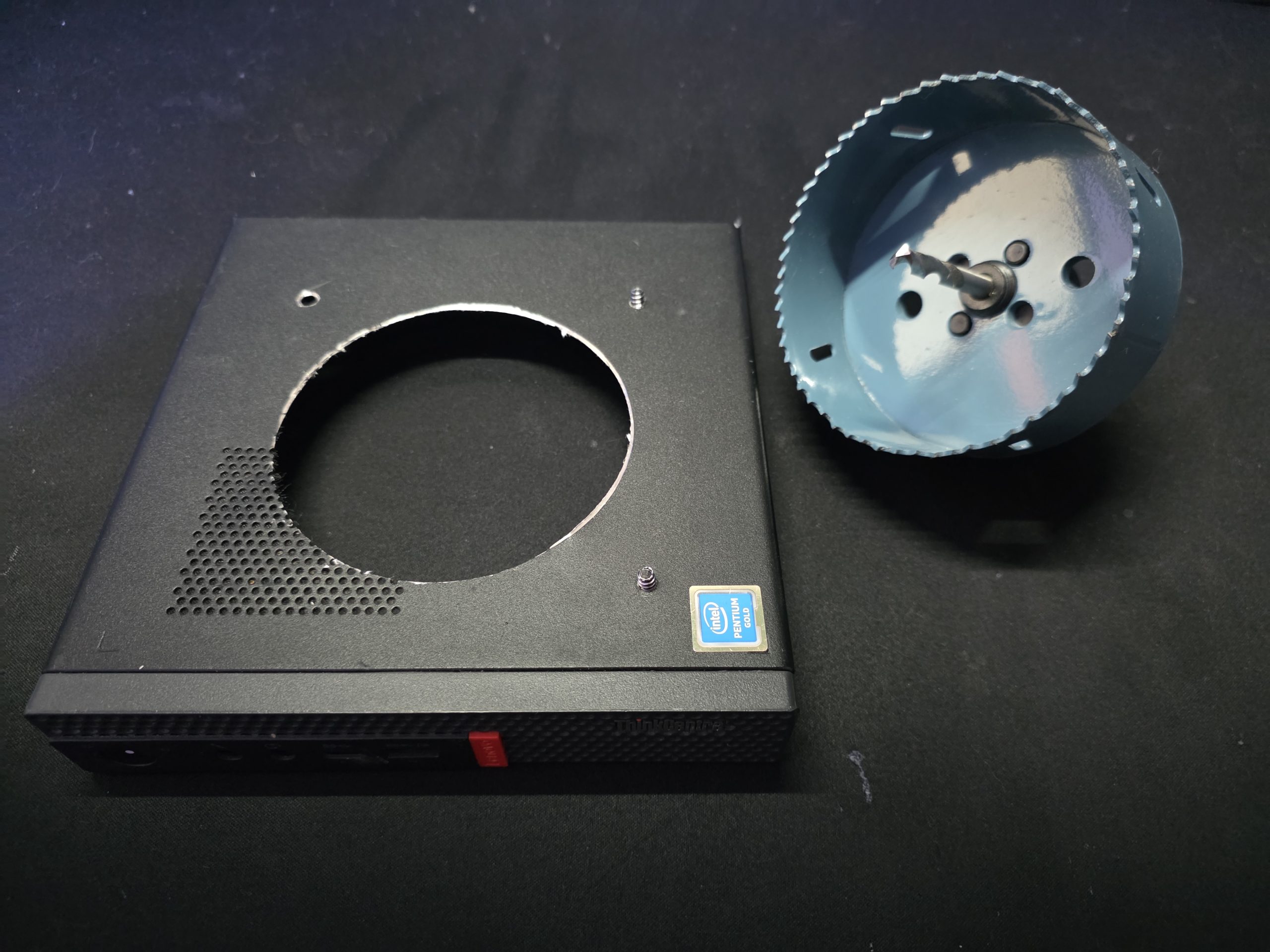
Drilling the Case
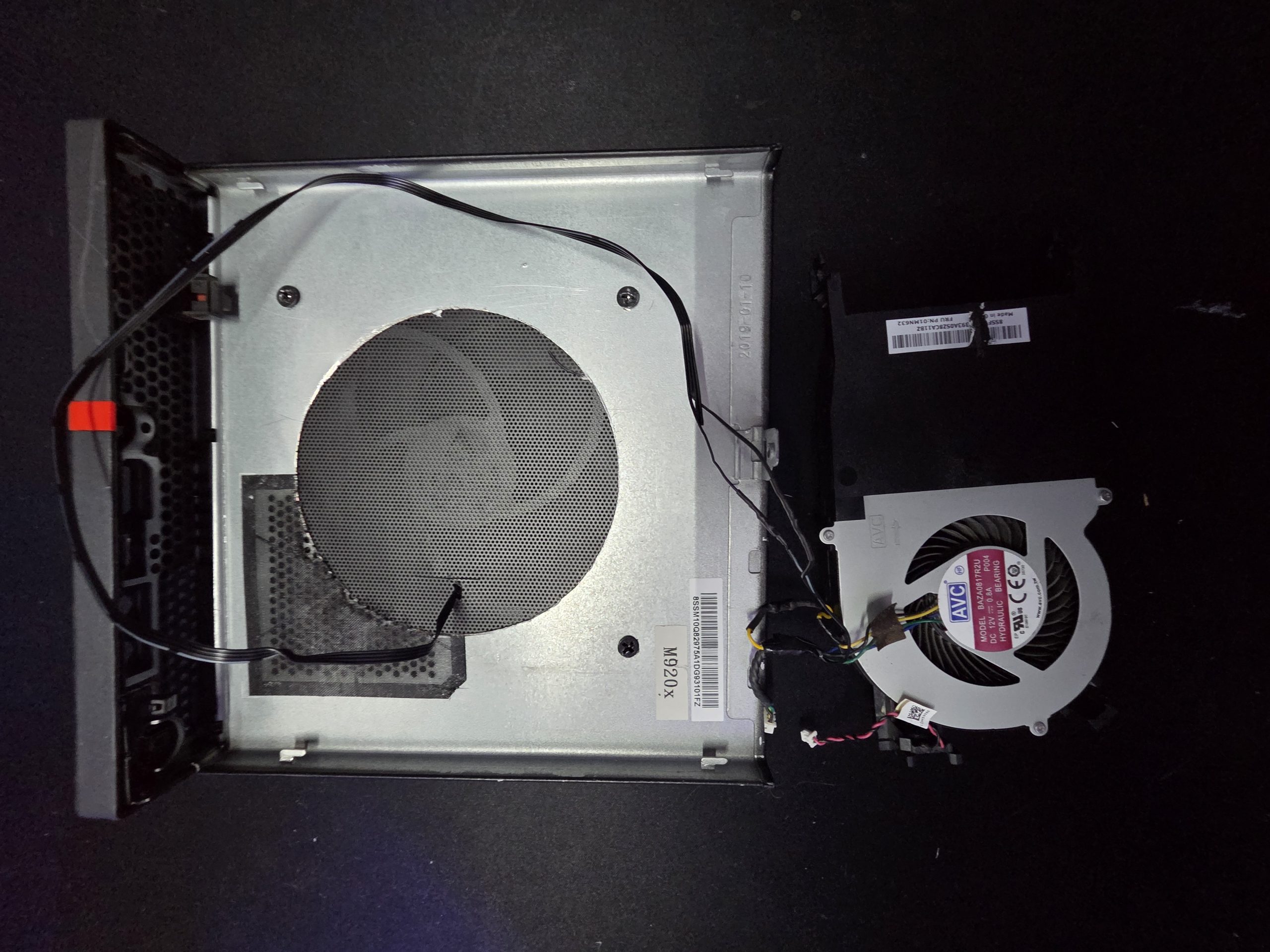
To ensure the server remains clean during 24/7 operation in a rack, I custom-cut a high-flow dust mesh filter. The mesh was secured to the underside of the newly cut hole, acting as a barrier between the Arctic fan and the outside environment.
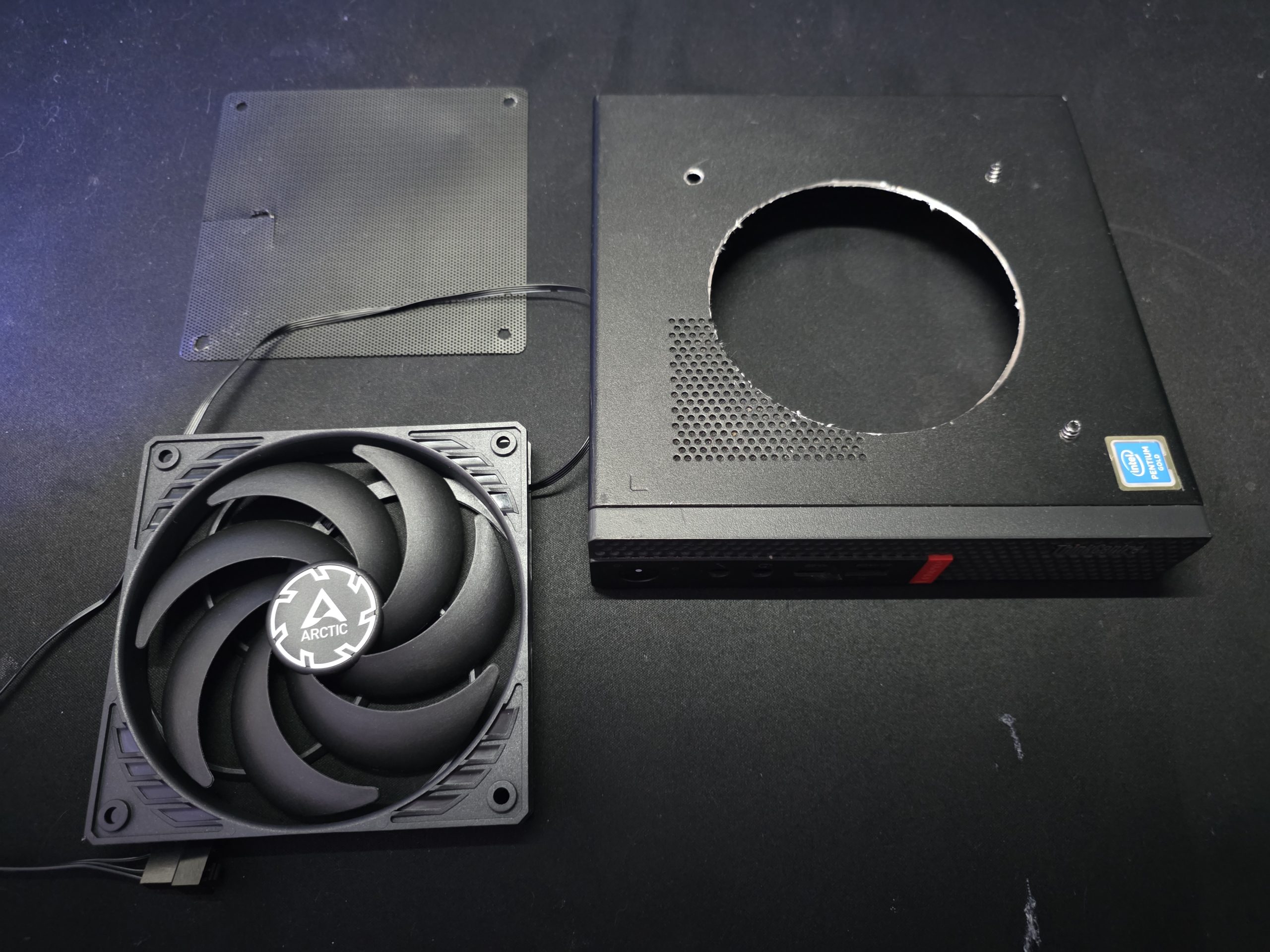
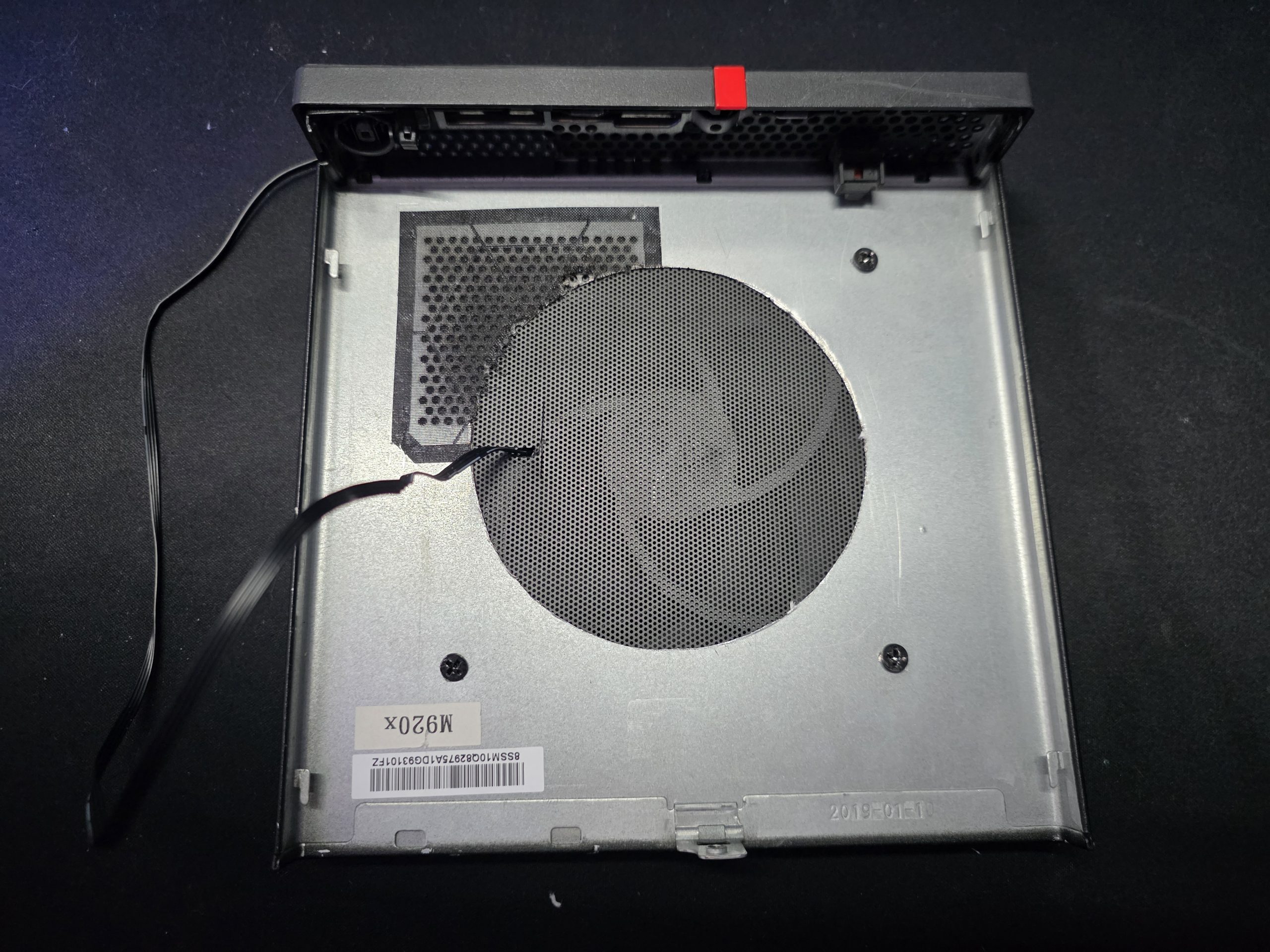
The interior view of the modified top cover, with the mesh and 120mm fan perfectly aligned for maximum downward airflow.
Step 2: The Acoustic Modification (Soldering)
While the Arctic 120mm fan pushes a tremendous amount of air compared to the stock Lenovo blower, I wanted to guarantee whisper-quiet operation, even if the motherboard’s fan curve aggressively ramped up the PWM signal.
To achieve this, I modified the fan’s wiring harness.
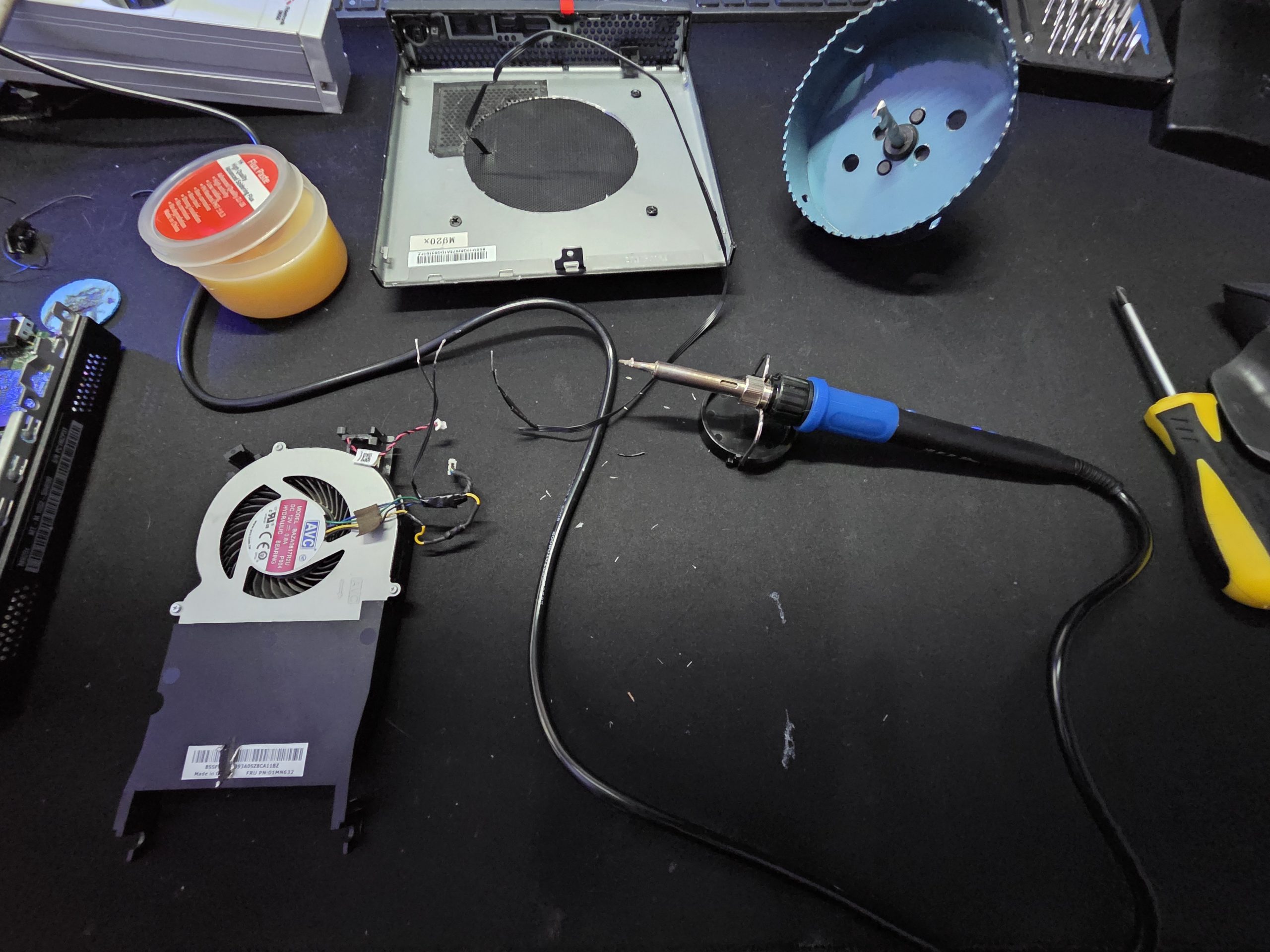
I desoldered a step-down resistor from a Noctua Low-Noise Adapter (LNA) and integrated it directly into the Arctic fan’s power cable. This hardware-level modification caps the maximum voltage reaching the fan motor, ensuring it never hits its acoustic ceiling while still providing vastly superior cooling performance over the original setup. I also spliced the proprietary Lenovo fan connector onto the Arctic fan to ensure native motherboard integration.
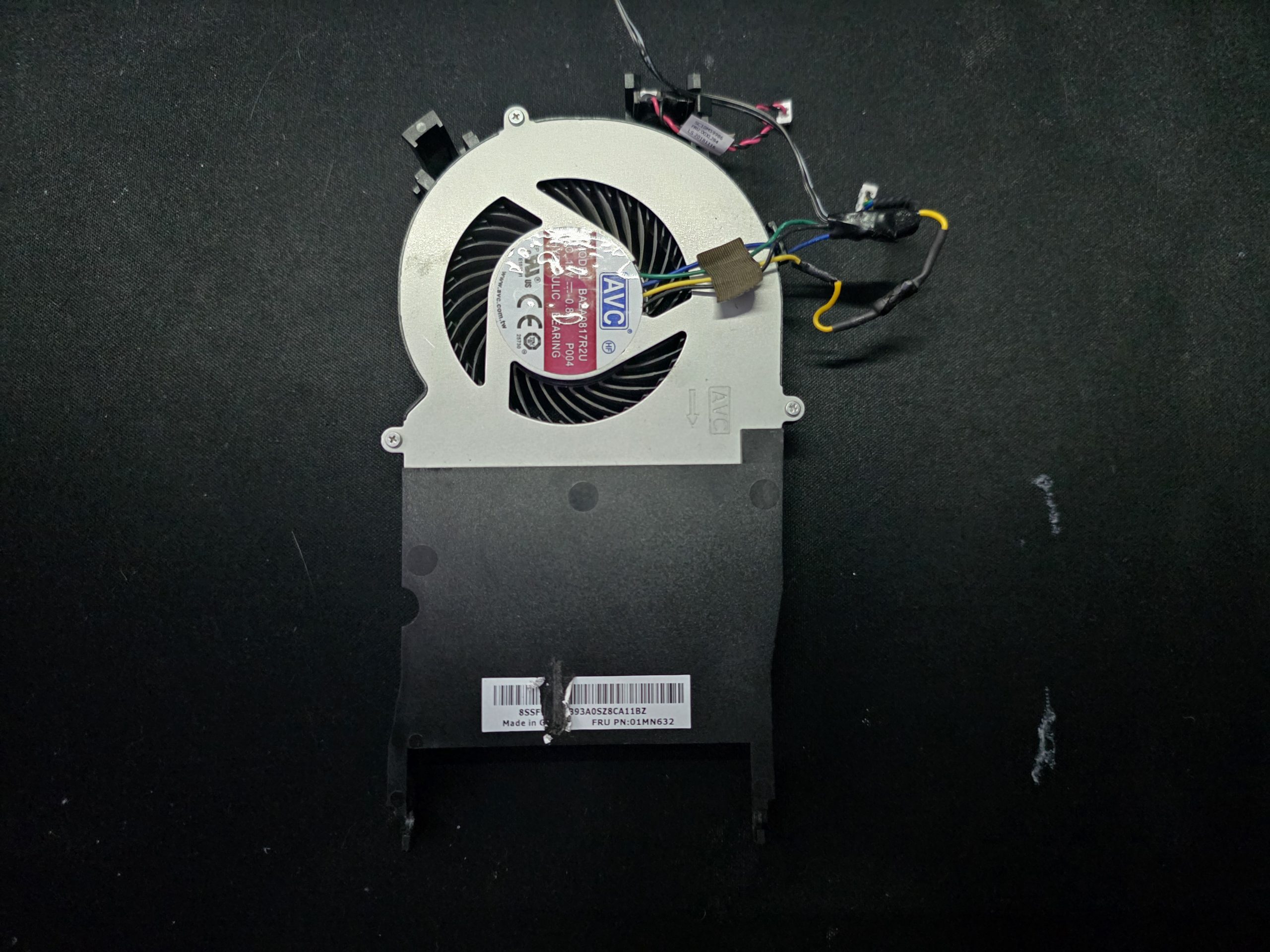
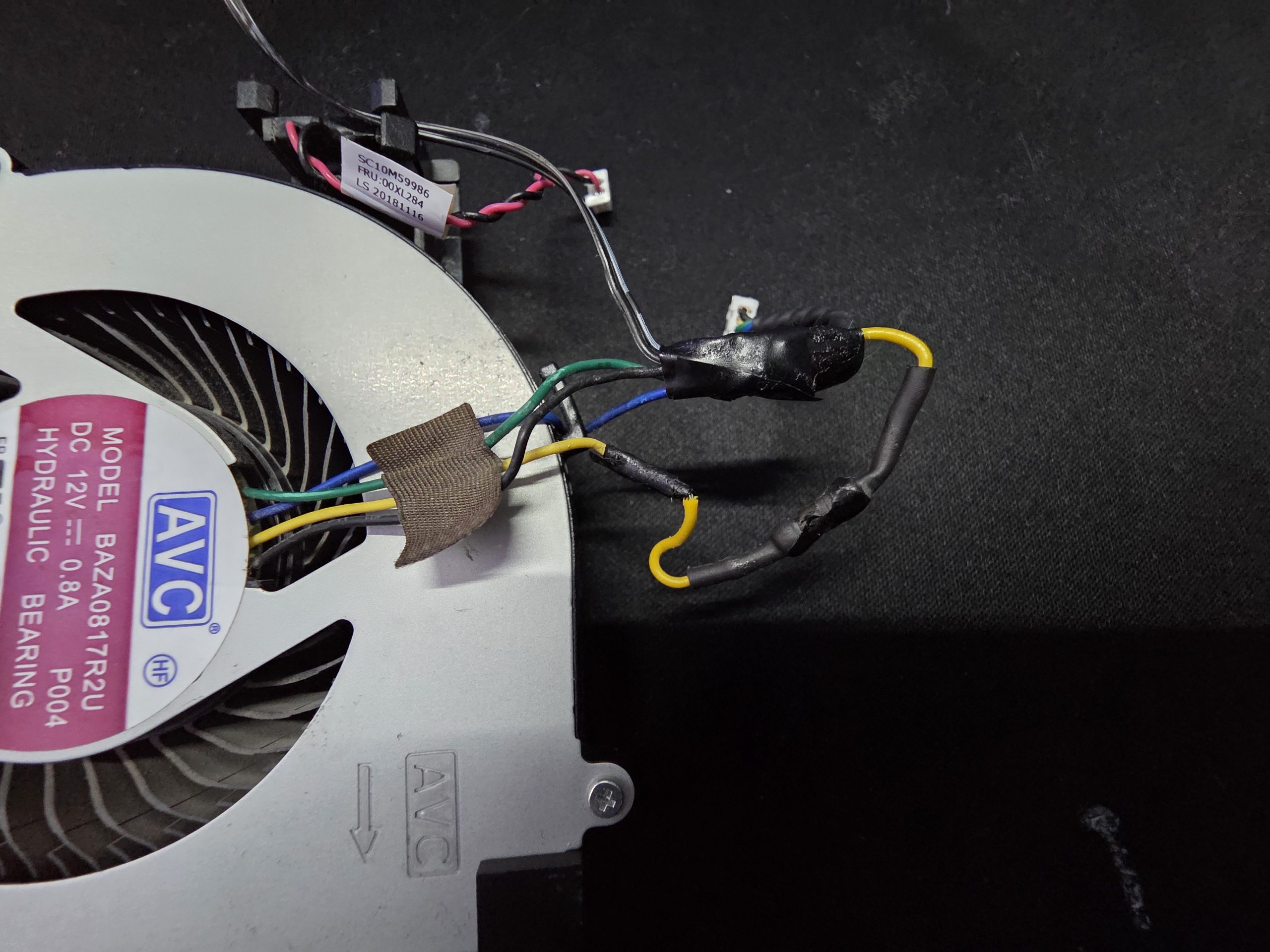
The completed fan modification, cleanly heat-shrunk and ready for installation.
Step 3: Storage and Networking Assembly
With the thermals addressed, it was time to populate the board.
One of the most powerful tricks with the M920x is utilizing the M.2 Wi-Fi slot for high-speed storage. Using an M.2 A+E key to M-key ribbon adapter, I successfully mounted the 512GB NVMe SSD. This is incredibly useful for separating the hypervisor boot drive or cache tier from the primary storage pool.
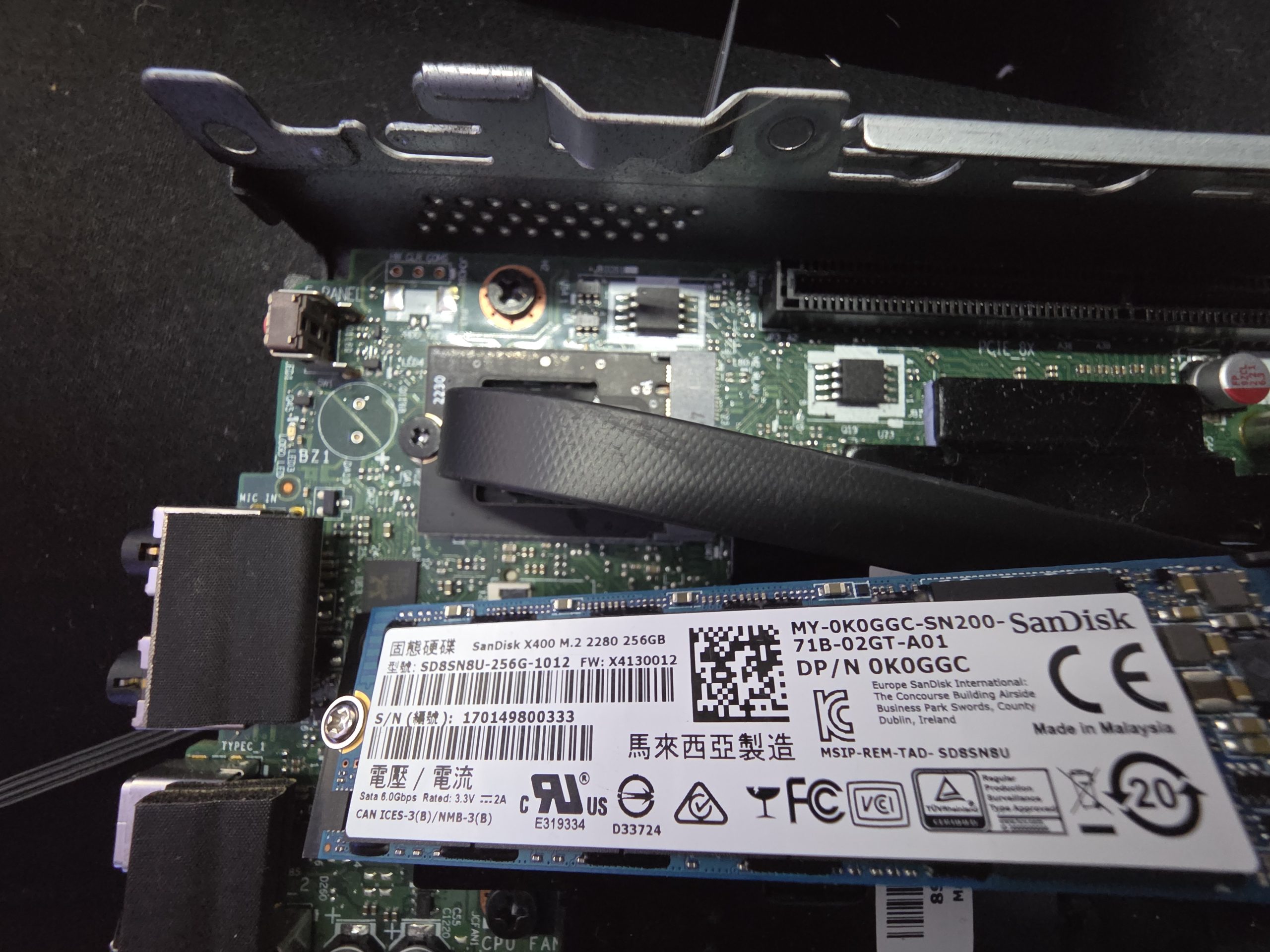
Following the boot drive installation, the rest of the system was assembled:
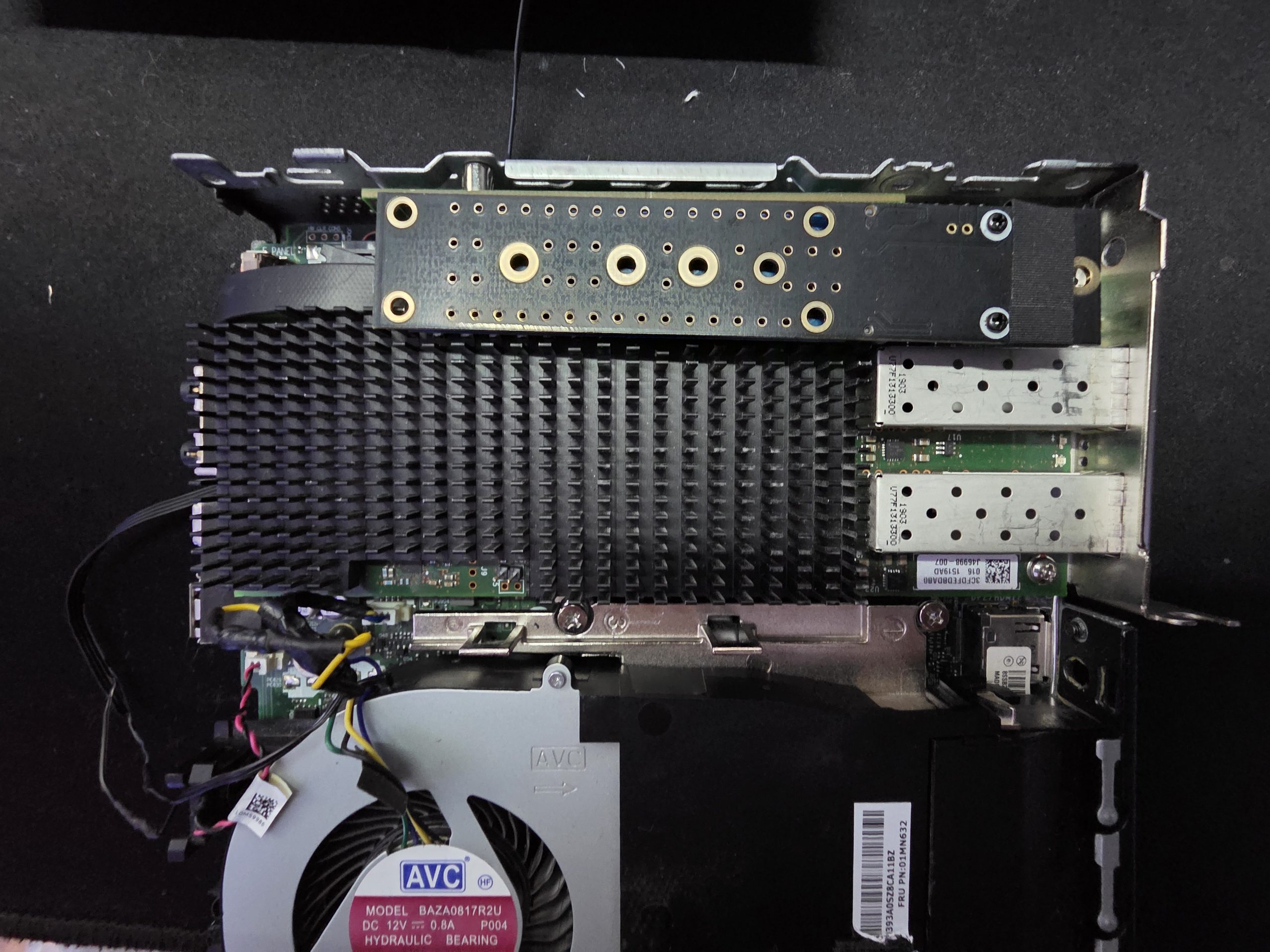
Networking: The Intel X710-DA2 was mounted via the PCIe riser, giving this micro-server two 10Gbps SFP+ ports—essential for fast vSAN backend traffic.
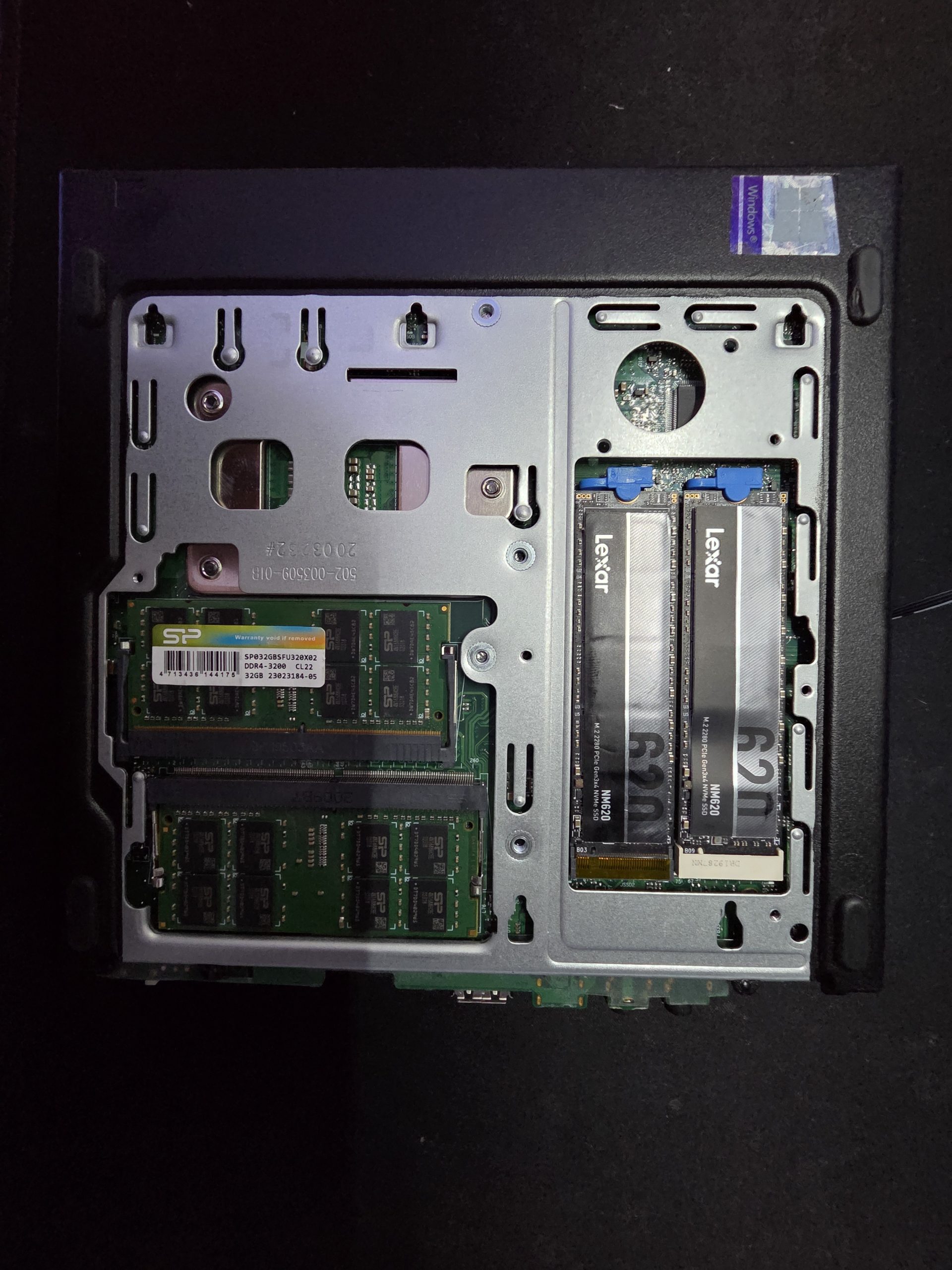
- Memory & Storage: The 64GB of DDR4 RAM and the two 1TB NVMe SSDs were secured into their respective motherboard slots.
The Final Result
Once the chassis was closed up, the transformation was complete. The M920x retains its incredibly small footprint but now features an aggressive, functional top intake that keeps the i7-8700 well within its thermal limits without sounding like a jet engine.
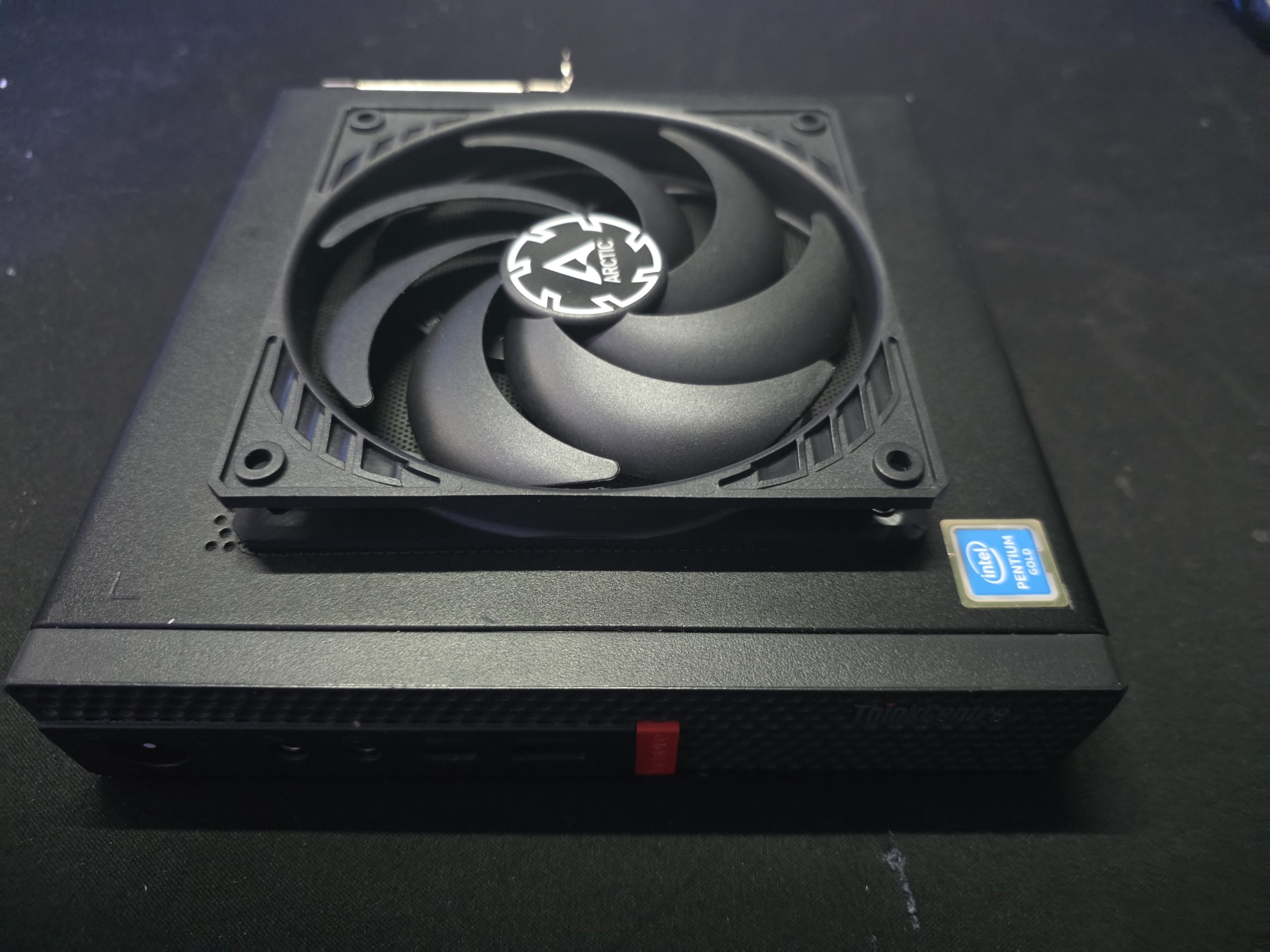
The ultimate payoff is seeing this modification scaled up. Four of these heavily modified, 10GbE-equipped, triple-NVMe Lenovo M920x units are now neatly mounted in the rack, humming away silently as a highly efficient, high-performance computing cluster.
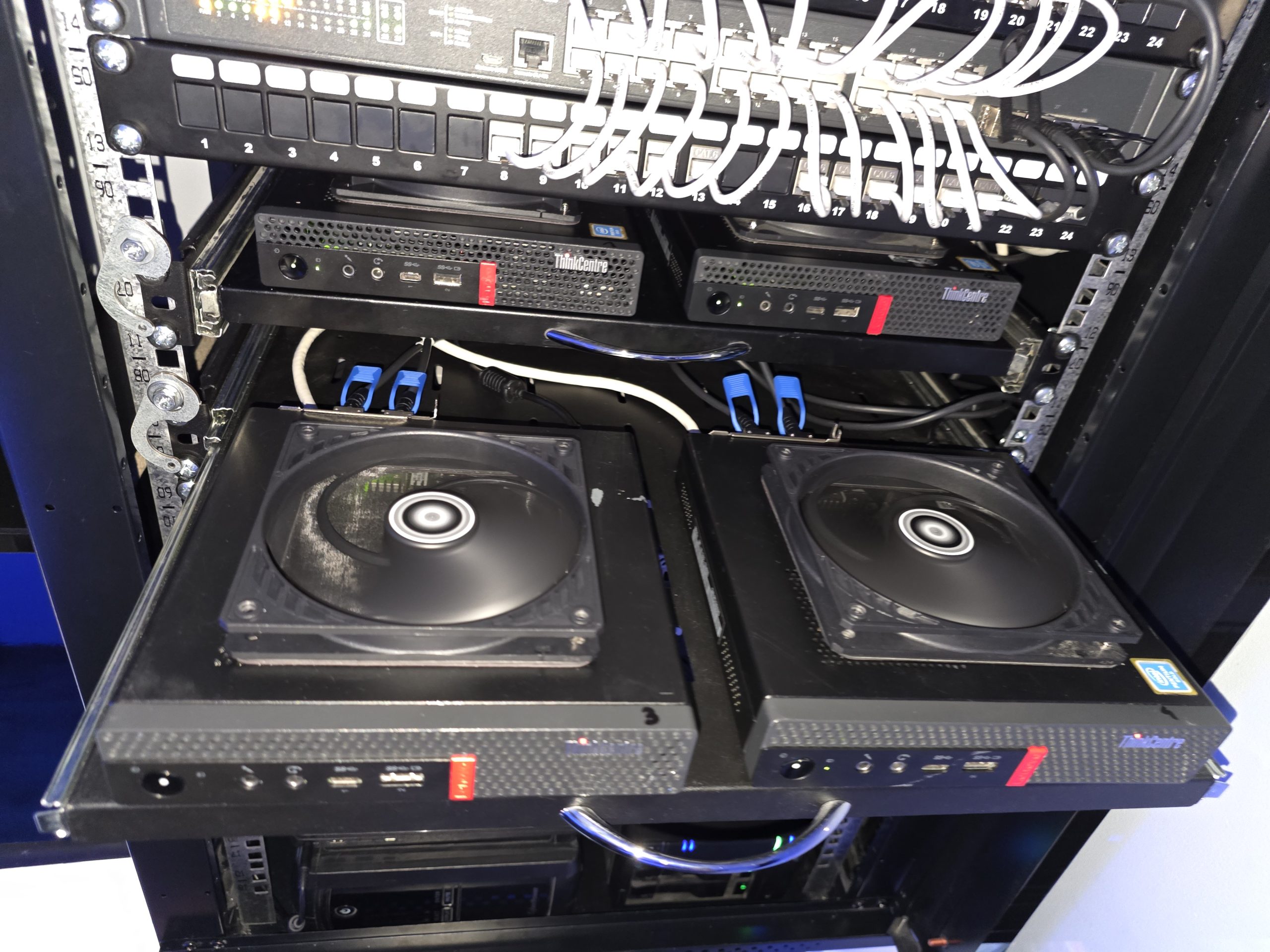
This mod proves that with a hole saw, a soldering iron, and a bit of patience, you can engineer the perfect home data center node.