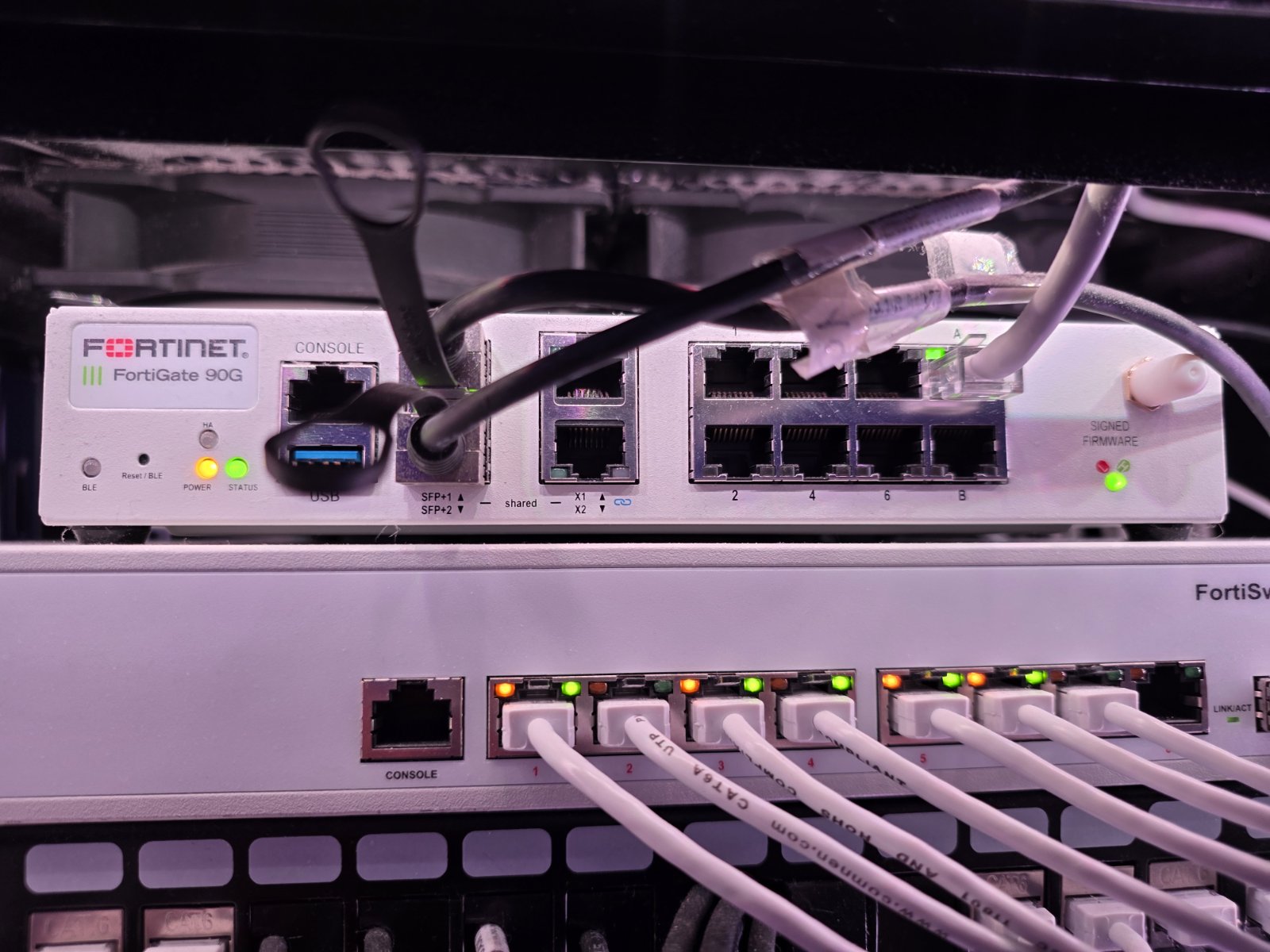
Building an advanced homelab often feels like a constant collision between engineering dreams and the brutal reality of enterprise hardware pricing. For the longest time, running a fully licensed, modern Unified Threat Management (UTM) firewall at home felt financially impossible. The hardware is expensive, but the annual subscription renewals are what truly break the bank.
My goal was clear, but my requirements were strict: the firewall had to have 10GbE interfaces, and it absolutely required a fully active, legitimate license.
The Used Market Trap: The FortiGate 100F
My first attempt at securing edge routing led me to a used FortiGate 100F that I managed to snag for a relatively low price. On paper, it was perfect—it satisfied my first condition by offering native 10GbE ports.
However, the honeymoon phase ended the moment I looked into subscription options. The cost to purchase and maintain a basic security license for a 100-series appliance was astronomical. It was a massive financial dead-end for a homelab environment, forcing me to rethink my entire strategy.
The Israeli eBay Gamble
The breakthrough came during a late-night eBay deep dive, where I found a seller in Israel offering brand-new FortiGate 90G units at incredibly tempting prices. The deal looked great, but it came with a massive list of risks:
-
-
Customs and Import Duties: Buying high-value electronics from outside the EU usually guarantees a hefty customs bill upon arrival.
-
The Conflict in Gaza: An active war zone introduced serious concerns about shipping delays, lost packages, or logistics collapsing entirely.
-
Seller Reliability: Wiring a substantial amount of money to an unknown distributor halfway across the world is always nerve-wracking.
-
Region Locking: My biggest fear was that a Middle Eastern unit’s serial number (SN) would be geo-blocked, preventing me from activating a European license through a Polish distributor.
-
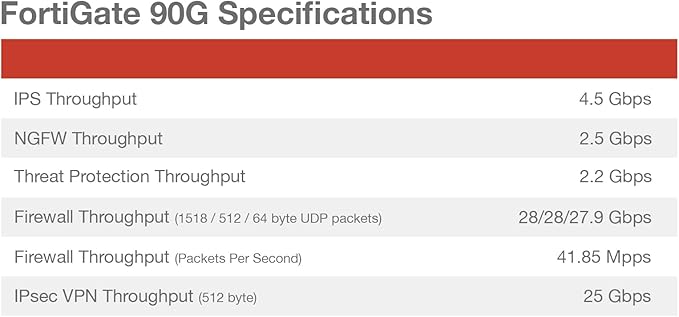 I briefly considered stepping up to the FortiGate 120G. The 1U rack-mount form factor and four 10GbE ports were highly appealing—giving me room to scale with multi-gigabit dual-WAN in the future. However, reality set in: the ATP (Advanced Threat Protection) license for the 120G was exactly double the price of the 90G. I decided to stick to the 90G and roll the dice.
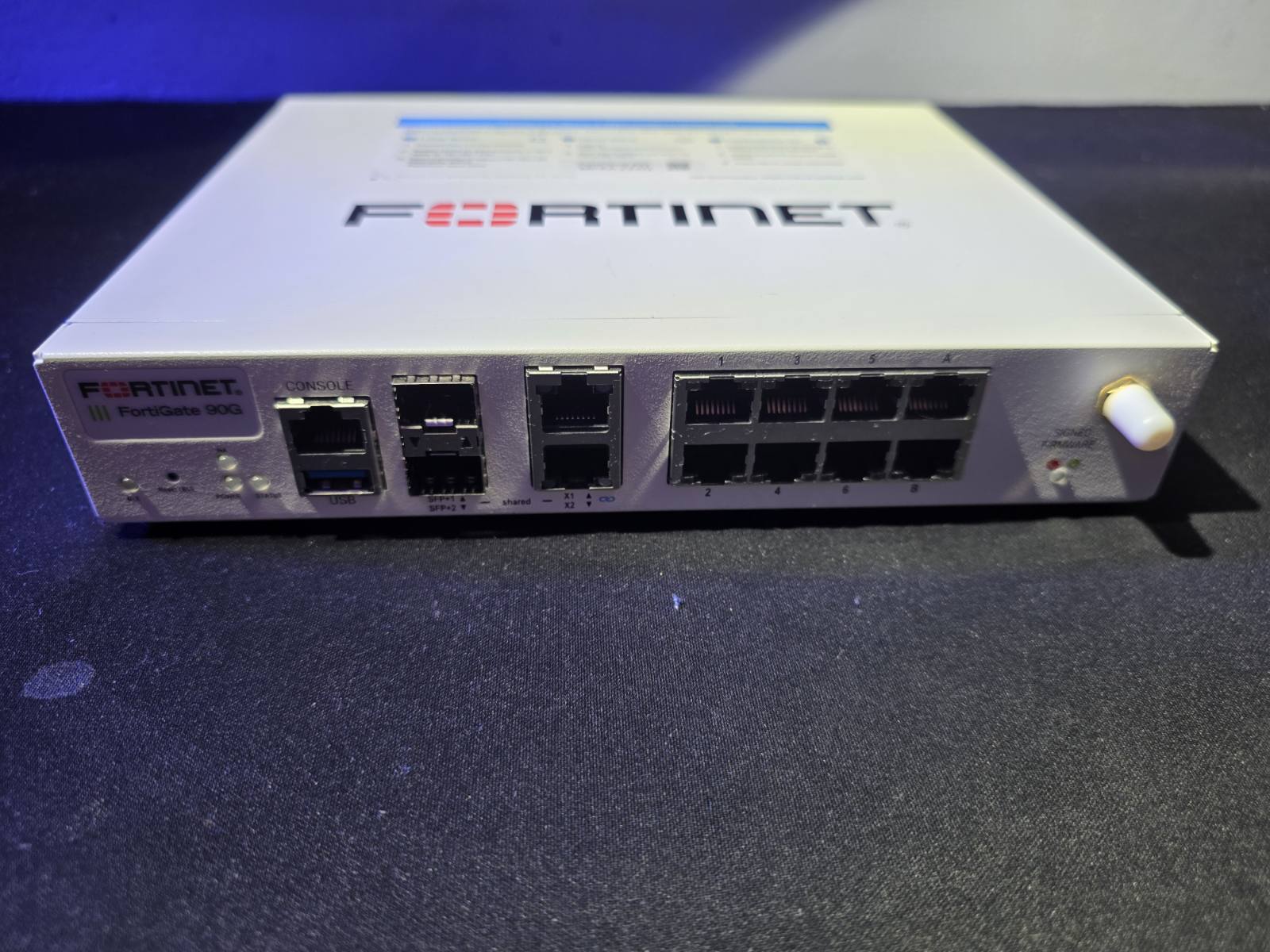
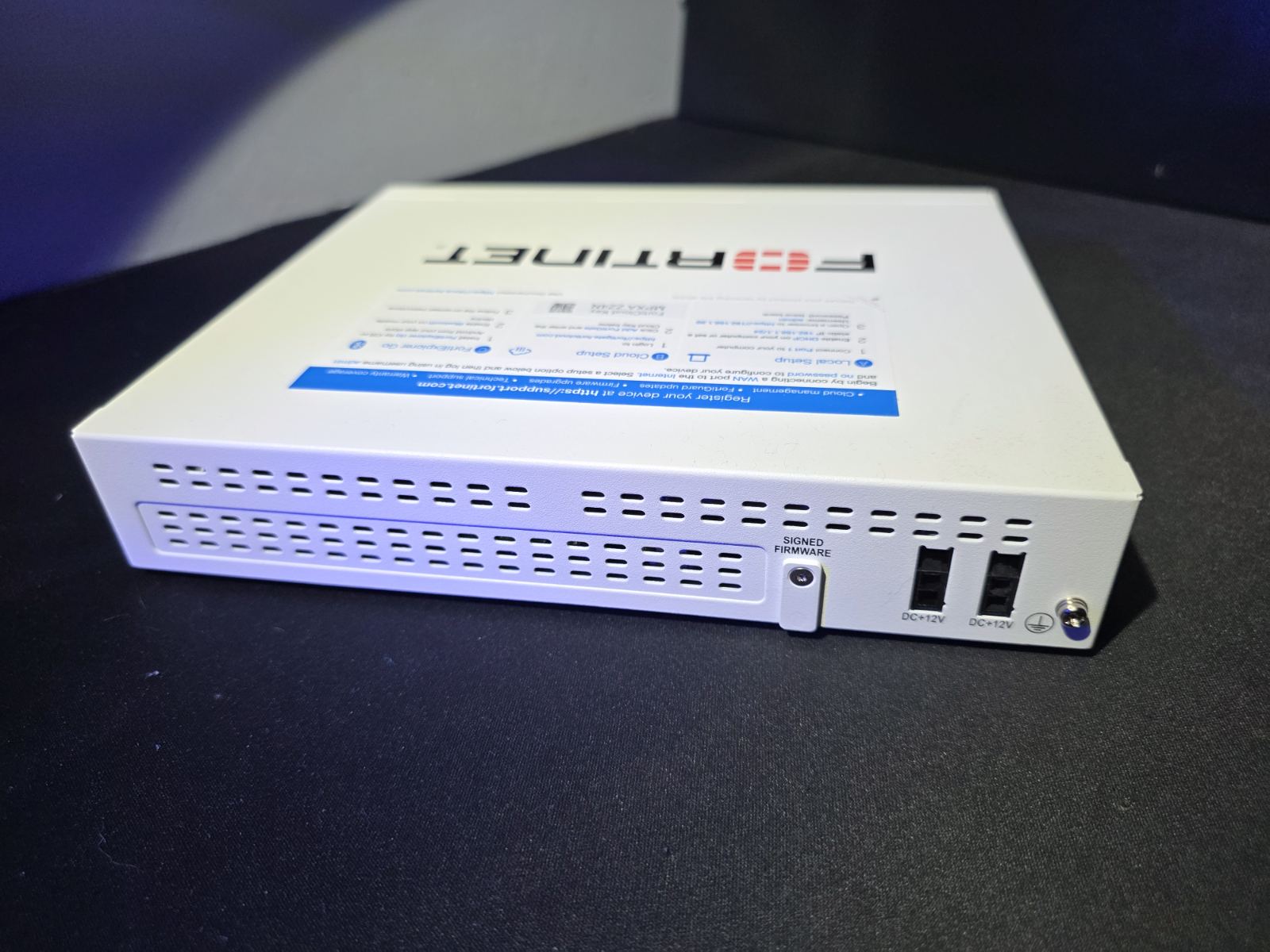
The gamble paid off spectacularly. The package arrived via FedEx faster than expected, it somehow slipped past customs without any additional duties, and—most importantly—my local distributor confirmed the SN was perfectly valid for an ATP license. For a fraction of the standard retail price, I secured one of Fortinet’s newest UTMs.
Why 10GbE is Non-Negotiable
When you are running a 4-node Minisforum VMware cluster interconnected by a blazing-fast 25GbE MikroTik fabric, traditional 1GbE firewall interfaces become a catastrophic bottleneck.
If the FortiGate only had 1GbE ports, even bonding them together via LACP wouldn’t be enough. In a segmented network, all traffic crossing between VLANs—whether it’s server chatter, storage access, or public-facing services—must pass through the firewall for policy inspection (inter-VLAN routing). The dual 10GbE ports on the 90G ensure that the firewall can effortlessly route and inspect hefty packets without choking the massive bandwidth generated by the 25GbE backbone.
 Unleashing the ATP License
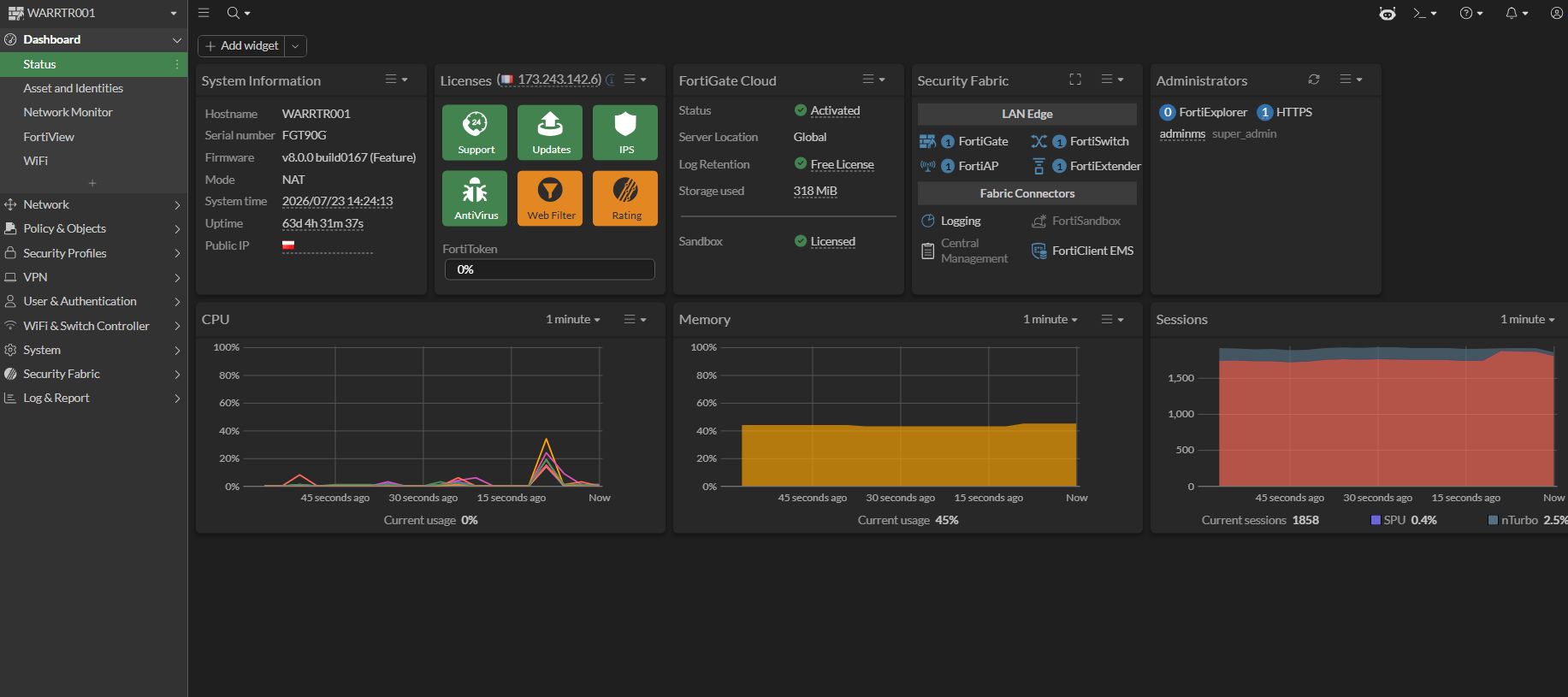
Securing the ATP license radically changed how I expose and protect my services:
-
-
Deep Packet Inspection (DPI): To truly utilize Intrusion Prevention (IPS) and Anti-Virus (AV) profiles, I enabled DPI. This required pushing the
Fortinet_CA_SSLcertificate into the Trusted Root Certification Authorities across my servers to ensure seamless decryption and inspection without breaking secure connections. -
Protected Mail Flow: My Microsoft Exchange server now sits securely behind a Proxmox Mail Gateway (PMG), fully isolated from direct external access, giving me granular control over inbound and outbound traffic.
-
DirectAdmin and VIPs: The VM hosting DirectAdmin utilizes Virtual IPs (VIPs) on the FortiGate. The setup smoothly handles dual public IP routing while allowing for automated Let’s Encrypt certificate renewals.
-
Bleeding-Edge Firmware: Having a valid license means I get to play with the latest software. I’ve already been testing the new features introduced in FortiOS 8.0 directly on this unit.
-
The Broader Fortinet Ecosystem
The FortiGate 90G is just the „brain” of the operation. It anchors a wider ecosystem that makes network management a breeze:
-
-
FortiSwitch 108E: A PoE-enabled switch that provides power and connectivity to my surveillance cameras.
-
FortiAP 231F: Powered directly by the FortiSwitch, allowing me to broadcast specific SSIDs tied directly to firewall VLANs.
-
FortiExtender 201E: My failover lifeline. If the primary fiber connection drops, this LTE modem automatically kicks in to keep the homelab online.
-
FortiAnalyzer (VM): The unsung hero that aggregates logs from all these devices, providing beautiful dashboards and alerting me to network anomalies.
-
Summary: The Verdict – Worth Every Penny and Every Risk
Looking back at the entire process—from navigating the uncertainties of an overseas eBay listing to configuring deep packet inspection—upgrading to the FortiGate 90G has completely transformed my homelab.
It bridged the gap between enterprise-grade security and home infrastructure. Gone are the days of network bottlenecks at the firewall level or worrying about exposed self-hosted services. With 10GbE throughput, active threat protection, and seamless integration with my 25GbE vSAN cluster, my setup has evolved from a hobbyist playground into a resilient, production-ready private environment.
Investing in high-end hardware and taking that calculated gamble was undoubtedly a big step, both financially and logistically. But the result is absolute peace of mind, rock-solid stability, and a network architecture that truly stands in a league of its own. It was worth every single penny.